

Supporting Youth Grieving Substance-Related Loss
/
Introducing a New Practitioner Workbook & Training Opportunity
Across British Columbia — and across Canada — communities continue to feel the devastating impact of the enduring toxic drug crisis. Behind every statistic is a young person navigating grief. A sibling. A cousin. A friend. A parent. A peer. A youth worker. A family.
And too often, the grief that follows substance-related loss is layered with stigma, silence, and isolation.
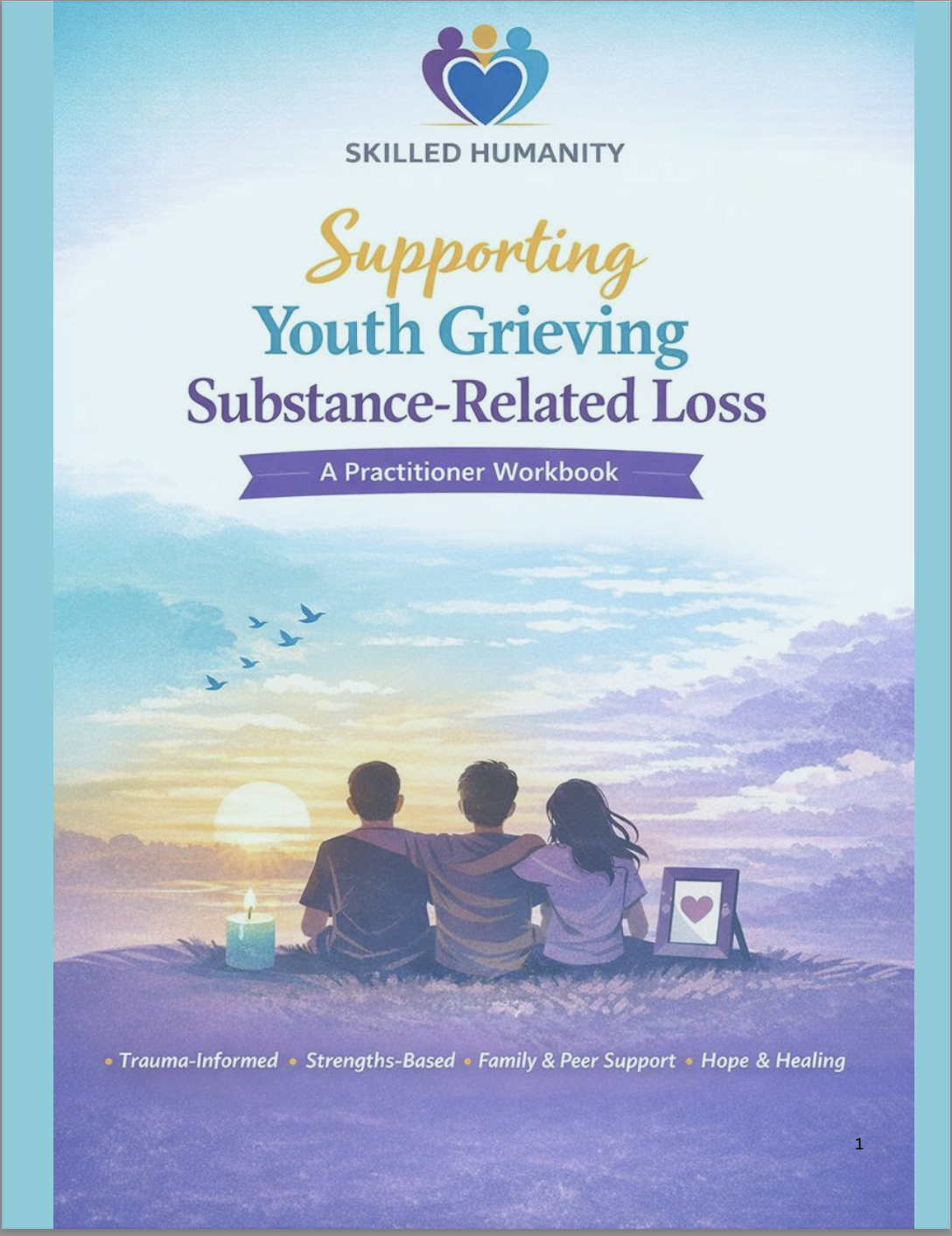
I am deeply honoured to introduce my latest publication Supporting Youth Grieving Substance-Related Loss: A Practitioner Workbook— a trauma-informed, strength-based, and relational curriculum designed to support counsellors, youth workers, hospice staff, educators, and community practitioners working with youth and families impacted by drug toxicity deaths and living loss.
This workbook — and the two-day workshop that accompanies it — was created in response to what I have heard repeatedly from practitioners:
“We were trained in grief.”
“We were trained in substance use.”
“But we were not trained in this.”
What the Workbook Offers
This practitioner workbook is both a curriculum companion and a stand-alone reflective tool. It integrates:
Contemporary grief theories (Dual Process Model, Continuing Bonds, Meaning Reconstruction)
Trauma-informed and culturally responsive practice
Equity-informed and anti-stigma approaches
Youth development and resilience frameworks
Harm reduction and motivational interviewing micro-skills
Family systems and peer grief support
Somatic regulation and co-regulation practices
Low-impact debriefing tools for practitioners and teams
It also includes:
Case vignettes rooted in Canadian contexts
Reflection prompts for supervision and team dialogue
Practical intervention tools
Ritual and memory-making guides
Safety and connection planning templates
Structured team response frameworks
This is concurrent, relational, dignity-centred care approach for youth living in an ongoing public health emergency.
What the Two-Day Training Offers
The in-person workshop brings the workbook to life through experiential learning and dialogue.
Participants engage in:
Story mapping and meaning-making exercises
Co-regulation and nervous system practices
Peer grief circle design
Family grief systems mapping
Equity and systems reflection
Structured case consultation
Justice-informed sustainability practices for helpers
The training is designed for skilled practitioners who want to deepen their capacity to:
Address concurrent substance use and grief safely
Support youth in stigmatized and cumulative loss
Work effectively with families navigating fear and silence
Build peer and community-informed responses
Sustain themselves in trauma-exposed work
This is nuanced work — grounded in research, lived experience, and the realities of today’s toxic drug crisis.
Piloting This Work in Community
I am incredibly excited to be piloting this training with the dynamic and dedicated teams in the Comox Valley and Port Alberni. These communities are demonstrating what courageous, collaborative, and compassionate practice looks like in the face of ongoing loss.
It is an honour to walk alongside practitioners who are committed to showing up — again and again — for youth and families.
Looking Ahead
This curriculum is designed to be community-specific with broad reach. The toxic drug crisis is not isolated to one region, and the need for grief-informed, youth-centered, stigma-aware practice continues to grow.
If your organization, school district, hospice program, health authority, or youth-serving agency is interested in hosting this two-day training, I would love to connect.
Together, we can:
Reduce stigma
Strengthen community response
Support youth navigating living and traumatic loss
Sustain the practitioners who do this vital work
The work is hard.
The grief is real.
And the opportunity to respond differently is here.
With care and commitment,
Stephanie